
AED Special Situations: A Las Vegas Guide for Real-World Rescues
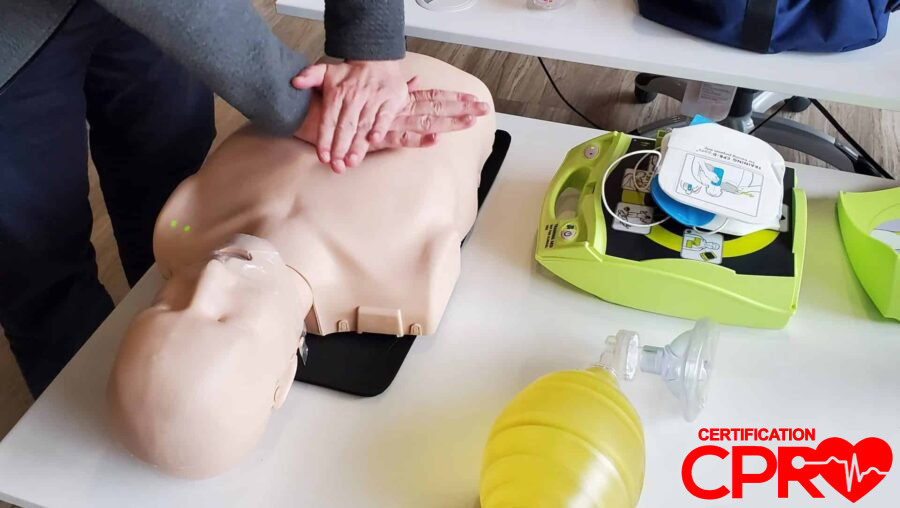
Training scenes are tidy. The manikin lies on a clean gym mat, the chest is dry, no jewelry, no implants, no surprises. Real Las Vegas rescues happen on a wet pool deck off Tropicana, on a Henderson construction site under July sun, on the polished concrete of a casino back-of-house corridor where the patient happens to be wearing a silver chain and a medication patch. Most of those complications have a fast, clean fix. They ask for a few seconds of preparation, not a dropped rescue.
Public AEDs are designed for ordinary people without medical training. The voice prompts cover the standard sequence. What the device assumes is that the pads will reach bare skin, that no nearby conductor will steal the shock, and that bystanders have stepped clear. When one of those assumptions fails, the rescuer’s job is the small adjustment that puts the device back on the right track.
The complications that show up most often in Clark County rescues fall into a short list: wet skin from pools and resort water features, jewelry, dense chest hair, metal surfaces (bleachers, work platforms, gurneys), and implanted pacemakers or defibrillators. Each has a known answer. None justifies leaving the cabinet closed.
Educational note: use this information for general awareness only. It is not a substitute for calling 911, hands-on training, or professional medical judgment during an emergency.
Upcoming CPR Class Dates and Times
Using an AED on Wet Skin
Water on the chest is not a movie problem about electricity arcing across a pool deck. It is a contact problem. Pad adhesive does not seat to wet skin, the seal lifts, and the rhythm trace the device is trying to read either disappears into noise or never gets clean enough to call.
If the patient is lying in a puddle or has just come out of a Summerlin community pool, drag them onto dry surface first if it can be done in a few seconds. Towel the chest where the pads will go. The whole body does not need to be dry. The two pad zones do.
Many AED kits include a small towel for exactly this purpose. If yours does not, a shirt or any nearby cloth gets the job done. The seconds spent on the dry-down are not wasted. They are what makes the shock count when the device delivers it.
AED Use with Jewelry and Piercings
A pendant or chain resting in the pad zone has to move. Pads do not go on top of metal because metal heats under shock current and changes the conduction path. The fix is to push the necklace aside or unclasp it before the adhesive goes down.
Piercings are usually a non-issue unless they sit directly under one of the standard pad locations: upper right chest under the collarbone, lower left side along the ribs. A nipple piercing or chest-jewelry stud in the pad zone gets the same treatment as any other obstacle in the way. Slide the pad an inch or two clear, place it on bare skin, and proceed. A small positional adjustment does not meaningfully reduce the shock’s effect; the device tolerates that kind of variance.
The wrong move is delaying the rescue to inventory every piece of jewelry the patient is wearing. Bracelets, earrings, rings, a watch on the opposite wrist — none of that matters. Address only the metal sitting in a pad zone. Everything else stays put.
AED Use with Chest Hair
Heavy chest hair is the most common adhesion problem, especially with male patients in the demographic that produces a high percentage of out-of-hospital cardiac arrests. The pad presses down, the rescuer steps back, and the corner immediately curls. A fur layer between the adhesive and the skin keeps the device from getting either a clean rhythm read or a clean shock path.
Most public AED kits in the Las Vegas Valley include a small disposable razor for this reason. A few quick passes across each pad zone clears enough hair for the adhesive to seat. The rescuer is not shaving the patient’s chest cosmetically. The job is two small clearings, one upper right, one lower left, in seconds.
If the kit does not carry a razor, the workaround is the “peel-and-pull.” Press the first set of pads down firmly onto the hairy chest, then peel them off in one motion. The adhesive lifts a significant amount of hair with it. Apply the spare set of pads — almost every kit ships with two sets — to the cleared skin, and the second seating is usually solid.
Using an AED on Metal Surfaces
Metal conducts current. A patient who collapses on a metal stadium bleacher at Allegiant Stadium, on a steel grating at a Henderson construction site, or on a metal-framed cot in a casino first-aid room gives the shock a path other than the one through the heart. Bystanders touching the same metal can pick up part of the dose.
The right move is to slide the patient off the metal before the device fires, even just a few inches onto dry concrete or carpet, if it can be done in seconds. Once the body is clear of the conductive surface, the rescue runs normally: pads on dry bare skin, clear command, follow the prompts.
If moving the patient is genuinely not possible — pinned by debris, on a fixed metal platform that cannot be cleared, in a confined space — the response still proceeds. Keep the pad electrodes themselves off the metal, keep bystanders from touching the surface, and deliver the shock. An imperfect setup that gets a defibrillation onto the chest is still a far better outcome than a textbook setup that never happens.
AED Use with Pacemakers and Implants
A pacemaker or implantable cardioverter-defibrillator (ICD) sits as a hard rectangular or oval lump just under the skin of the upper chest, almost always below one of the collarbones. Most are on the upper left, but the upper right is common enough that a quick look and feel before placing pads is worth the second.
Upcoming CPR Class Dates and Times
The fix is positional. Move the pad an inch or two away from the visible or palpable bulge so it sits on clean skin, not directly over the implanted hardware. The standard upper-right pad slides slightly lower or laterally to clear the device. The shock still reaches the heart effectively from that adjusted spot; the device does not require millimeter-perfect placement to do its work.
An ICD is no reason to assume the situation is already handled. The implanted device may have failed to fire, may have fired and not converted the rhythm, or may be working on a different problem than the one currently in front of the rescuer. Cardiac arrest in a patient with an ICD or pacemaker still gets the same response: adjust pad placement around the device and let the AED do its job.