
American Heart Month in Las Vegas: Awareness, Prevention, and CPR Readiness
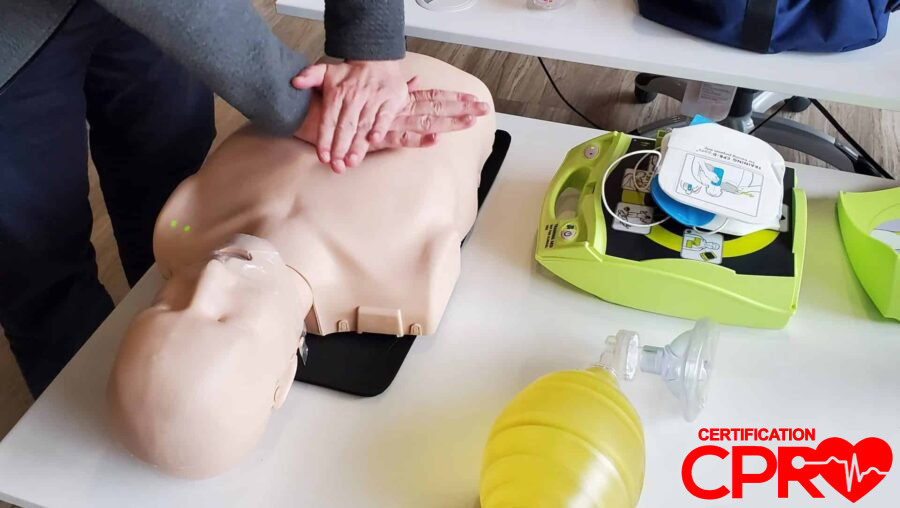
Every February, red banners go up at hospitals, walks fill park trails, and public-health campaigns repeat the same uncomfortable fact: heart disease kills more Americans than any other cause. Across the Las Vegas Valley, the visible part of that effort runs through UMC, Sunrise, MountainView, and Desert Springs corridors, gym lobbies in Summerlin, and CCSD staff bulletins. The campaigns matter only when they translate into something tangible: a blood pressure check that finally happens, a follow-up scheduled with a doctor, a household member who signs up for hands-on CPR training before the year ends.
Decades of medical advances have not dislodged heart disease from the top of the national mortality table. It still claims more than 700,000 American lives each year, roughly one death every 35 seconds. American Heart Month, designated by Congress in 1963 and observed every February since, only earns its calendar slot when awareness turns into action on both sides of the cardiovascular equation: prevention before a crisis, and CPR readiness for the moment prevention is not enough.
What American Heart Month Is
American Heart Month was established by joint resolution of Congress in 1963, at the urging of President Lyndon Johnson, by which point heart disease was already firmly seated as the leading cause of American deaths. The American Heart Association has co-led the public awareness effort from the start. February anchors the month for two reasons. Heart disease peaks in winter, when cold snaps tighten blood vessels and stress already-strained cardiovascular systems, and the timing rides on Valentine’s Day, which makes the heart symbolism almost impossible to miss in school hallways, hospital lobbies, and the storefronts along Las Vegas Boulevard.
National Wear Red Day lands on the first Friday in February and is the campaign’s highest-visibility moment, focused specifically on women’s heart health. Women were historically underrepresented in cardiovascular research, and they often present heart attack symptoms more quietly than the textbook crushing-chest-pain image. The red campaign is, in part, a correction of that blind spot, reminding women and the clinicians treating them that heart disease is every bit as much a women’s issue as a men’s.
Upcoming CPR Class Dates and Times
The American Heart Association’s broader February efforts push education on risk factors, encourage screenings for blood pressure and cholesterol, and promote lifestyle changes with documented impact on outcomes. The campaigns travel through workplaces, schools, healthcare systems, and community organizations across Clark County all month long.
Why Heart Disease Awareness Matters
Heart disease has held the top mortality slot in the United States for more than a century, and the headline number obscures something important: a large share of it is preventable. Roughly half of all Americans live with at least one of the three major cardiovascular risk factors (high blood pressure, high cholesterol, and smoking), and many of them do not know it. High blood pressure earns the “silent killer” label because it produces no symptoms until it announces itself as a heart attack or a stroke. About one in three American adults has high blood pressure, and roughly one in five of those adults has no idea.
Awareness campaigns move those numbers when they prompt people to schedule screenings they have been deferring, talk through risk profiles with their physicians, and make changes before a first symptom announces itself. The campaigns also push back on the fatalism that surrounds the disease, the assumption that cardiovascular trouble is simply what happens with age, by demonstrating that lifestyle choices shift risk meaningfully at any point in life.
The economic case sits behind the human one but still warrants noting. Cardiovascular disease costs the U.S. healthcare system roughly $400 billion a year in direct medical spending and lost productivity. Prevention runs dramatically cheaper than treatment.
Simple Heart-Healthy Actions
The actions with the largest cardiovascular impact are not complicated, but they require consistency. Managing blood pressure (through sodium reduction, regular physical activity, weight management, and medication when prescribed) is the single most consequential intervention for cutting heart attack and stroke risk. The American Heart Association recommends at least 150 minutes of moderate-intensity aerobic activity each week, or 30 minutes five days a week. In a city built on walking distance (resort floors, the Strip, Henderson trails, Red Rock loops), that quota is easier to hit than people give themselves credit for.
Quitting smoking produces unusually fast cardiovascular benefit. Within a year of quitting, excess risk of heart disease drops by roughly half. Within fifteen years, a former smoker’s cardiovascular risk approaches that of someone who never smoked at all. No other single lifestyle change produces a faster or larger reduction.
Diet adjustments with documented cardiovascular benefit involve cutting sodium and saturated fat, leaning more on vegetables and whole grains, and trading processed foods for less-processed alternatives. The Mediterranean diet and the DASH diet both carry strong evidence behind them, and neither requires eliminating entire food groups; the work is in proportions and patterns rather than hard restrictions.
Regular screening also belongs on the list. Blood pressure, cholesterol, blood glucose, and body weight are all measurable, and most Las Vegas residents have access to at least some of those checks through annual physicals, pharmacy blood-pressure kiosks, or community health events. American Heart Month is a sensible prompt to schedule any screening that is more than a year overdue.
Why CPR Belongs in the Conversation
Roughly 350,000 Americans experience sudden cardiac arrest outside a hospital each year, which works out to about 40 events every hour across the country. Survival is almost entirely a function of how quickly bystanders act: calling 911, starting CPR, and using an AED if one is within reach. For every minute that passes without CPR, survival odds drop by roughly ten percent. The national average response window for EMS sits between nine and eleven minutes. Without bystander intervention in that window, most out-of-hospital arrests are not survivable.
American Heart Month naturally pulls cardiac risk into focus, which makes it an honest argument for CPR readiness in every Las Vegas household, workplace, and community space. Risk-factor management remains the most effective form of cardiovascular prevention. For the moment when prevention has failed and the event is unfolding in a kitchen, a hotel ballroom, or a CCSD school hallway, CPR is the intervention that decides whether the patient survives long enough to reach UMC or Sunrise. The two priorities are not in competition; they sit in sequence.
The American Heart Association has long advocated for both prevention and bystander response training, recommending that CPR certification reach as much of the general public as possible. Communities with higher rates of bystander CPR also post meaningfully higher cardiac arrest survival rates. Training translates directly into survival.
How to Participate in American Heart Month
At the individual level, participation usually means letting February push a deferred decision into the calendar: a blood pressure check, a real conversation with a primary-care provider about cardiovascular risk, or a specific lifestyle change that has been sliding for months. For smokers, February is a defensible moment to set a quit date and tell somebody about it. Social commitment is one of the few free interventions with measurable follow-through.
Upcoming CPR Class Dates and Times
Organizations across the Las Vegas Valley use American Heart Month to run blood-pressure screenings, build wellness programming into staff calendars, or bring hands-on CPR and First Aid training onsite. The evidence is consistent: workplaces with trained personnel respond more effectively to cardiac emergencies, and the training is a practical investment in employee safety in any industry where a guest, a coworker, or a customer might collapse on the floor. The AHA BLS Card is valid for two years, and First Aid is supplemental training that broadens the team’s emergency-response practice without changing the BLS credential underneath.
Schools and community organizations can host screening events, share educational material on cardiovascular risk, and promote AED locations on their own properties. AED awareness usually goes unexamined until somebody needs it. Most people, including the people who use a building daily, cannot tell you where the nearest cabinet is mounted. American Heart Month is a defensible time to fix that gap.